19b547a6-000_rd59c

South Africa’s Copyright Amendment Bill: Ongoing Parliamentary Debate

Date: February 2024, with developments continuing into 2025
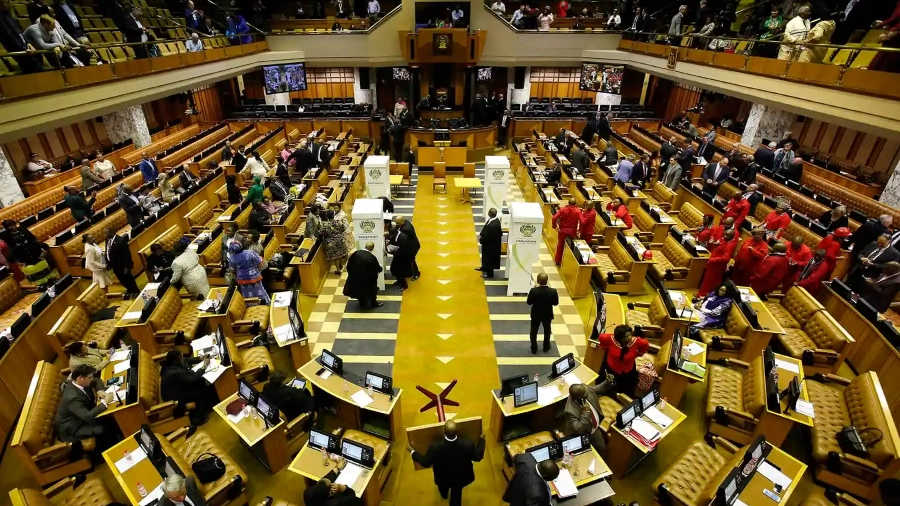
South Africa’s parliament passed the Copyright Amendment Bill in February 2024, a significant step toward modernizing the country’s 1978 Copyright Act. The bill, still awaiting presidential assent as of early 2025, aims to strengthen IP protections for creators while addressing accessibility issues, such as provisions for visually impaired persons. It introduces fair use principles, aligning South Africa’s copyright framework with global standards, but has sparked debate among creative industries over potential impacts on artists’ rights.

The International Panel of Legislators Advancing African IP (IPLA), registered in Harare and Yaoundé, has supported stakeholder consultations to balance innovation and creator protections. IPLA’s advocacy emphasizes harmonizing South Africa’s laws with the African Continental Free Trade Area (AfCFTA) Protocol on Intellectual Property Rights, under negotiation in 2025. The bill’s progress reflects parliamentary efforts to address IP challenges, though critics argue it needs clearer enforcement mechanisms to combat piracy, which costs industries like Nollywood millions annually.


Source: News24, February 29, 2024; IPLA Africa Advocacy Reports
images (3)

Morocco’s Parliament Strengthens IP Framework in 2025 Budget

Date: April 17, 2025
Morocco, ranked 22nd globally and first in Africa for IP strength in the 2025 International Intellectual Property Index, saw its parliament approve budget measures to enhance IP enforcement and innovation. The 2025 budget allocates funds for patent protections and treaty ratifications, reinforcing Morocco’s leadership in African IP. Parliamentary discussions emphasized closing gaps in innovation and enforcement, as Morocco’s score of 59.21% in the index highlights challenges in combating digital piracy and harmonizing laws regionally.

The African Regional Intellectual Property Organization (ARIPO) praised Morocco’s legislative efforts, noting their alignment with AfCFTA’s IP goals. Morocco’s parliament is also exploring amendments to cyber laws to address online IP infringement, responding to calls for harmonized legislation across African jurisdictions.
Source: en.yabiladi.com, April 17, 2025

copyright-3360802_640

Nigeria’s Parliament Reviews Copyright Act to Protect Nollywood

Date: November 2024, ongoing into 2025
Nigeria’s National Assembly is reviewing amendments to the Copyright Act to bolster protections for the country’s film industry, Nollywood, which faces significant losses due to piracy. The proposed changes, debated in late 2024, aim to strengthen enforcement mechanisms and align with international treaties like the WIPO Copyright Treaty. IPLA has been instrumental in facilitating dialogues between parliamentarians and creative industry stakeholders, advocating for laws that safeguard Nigeria’s $7 billion film sector.

The review follows a 2024 WIPO roundtable where IPLA highlighted Nollywood’s need for robust IP frameworks. Parliamentary committees are prioritizing anti-piracy measures and royalty collection systems, with draft legislation expected to be tabled in mid-2025. This effort reflects broader African parliamentary interest in leveraging IP for economic growth, as emphasized at the 5th All Africa IP Summit in Kigali (November 2024).
Source: LawTeacher.net, November 6, 2023; Africa.com, July 22, 2024

AfCFTA

AfCFTA Protocol on IP Rights: Parliamentary Engagement Across Africa

Date: Ongoing, with key discussions in 2024–2025
The AfCFTA Protocol on Intellectual Property Rights, under negotiation in 2025, has prompted African parliaments to align national IP laws with regional goals. At the 5th All Africa IP Summit (November 28–30, 2024, Kigali), parliamentarians from 16 African countries, supported by IPLA and the African Intellectual Property Centre, discussed strategies to integrate IP frameworks with AfCFTA’s trade objectives. The summit emphasized parliamentary action to address fragmented IP laws, which hinder enforcement across borders.

Countries like Kenya, Ghana, and South Africa are reviewing IP legislation to support AfCFTA’s protocol, with IPLA advocating for protections for traditional knowledge (TK) and traditional cultural expressions (TCEs). For example, Kenya’s parliament is considering amendments to its 2016 Industrial Property Act to include TK, inspired by South Africa’s 2013 Intellectual Property Laws Amendment Act (IPLAA). These efforts aim to create a unified IP ecosystem that fosters innovation and wealth creation, potentially unlocking $20 billion in creative economy revenue.
Source: Africa.com, July 22, 2024; Atlantic Council, September 23, 2024

1738750891264

South Africa’s Expropriation Act and IP Implications

Date: January 25, 2025
South Africa’s parliament passed the Expropriation Act in late 2024, signed into law by President Cyril Ramaphosa on January 24, 2025. While primarily focused on land reform, the act has raised concerns about its potential impact on IP rights, as it allows government expropriation of property—including intangible assets like patents or trademarks—under specific conditions (e.g., public interest, non-use of property). The Democratic Alliance (DA), a coalition partner, opposed the act, arguing it could undermine property rights, including IP, and is consulting lawyers for a constitutional challenge.

IPLA and legal experts have called for clearer parliamentary guidelines to ensure IP assets are not arbitrarily expropriated, citing risks to investor confidence in South Africa’s creative and tech sectors. The act’s passage highlights tensions between land reform and broader property rights, with ongoing parliamentary debates expected in 2025 to clarify IP protections.
Source: Fox News, January 25, 2025; Bloomberg, January 20, 2025